
Fire and Smoke Damper Inspection & Testing
Are your fire dampers legally compliant?
70% of buildings fail initial fire damper inspections. Non-compliance could void your insurance and put lives at risk.
Get expert testing from the UK’s trusted fire safety specialists – Indepth Services, part of the PTSG group, bringing you over 40 years of building safety expertise and nationwide coverage you can rely on.
Your legal duties & requirements
Fire and smoke dampers are located in your ductwork system at any point where the ductwork breaches the fire compartment.
Dampers are essential in preventing the spread of fire and smoke and the law sets out clear rules and guidance for their inspection, testing and maintenance.
Legal requirement The Regulatory Reform (Fire Safety) Order 2005 clearly states that it is the employer’s responsibility to maintain their fire safety systems. Your dampers are a key part of your fire safety system.
What's required?
You must first identify all the dampers in your building. This is done using your schematics or, if required, a physical inspection can be undertaken.
As dampers are located throughout your ductwork it is essential, and a legal requirement, that they are accessible. Builders’ hatches and access panels may need to be installed; our team can assist with this as part of our complete service.
To achieve compliance, it is imperative that all dampers are located and then tested.
Understanding fire compartments & damper systems
What is the fire compartment? Your building is made up of several fire compartments to prevent the spread of smoke and fire. Each is designed to contain smoke and fire for a period of time; this is referred to as the fire rating.
Compartment types:
- Typical buildings: entire floors serve as compartments
- Larger buildings: multiple compartments per floor
- Purpose-built structures (hotels): individual rooms can be compartments
What are dampers? Ductwork runs throughout your entire building, providing fresh air and heat. Where it is necessary for ductwork to breach the fire compartment a fire damper is installed.
There are several types of damper, but the principle of how they work is the same. In the event of a fire, a fire damper closes to maintain the fire barrier, bridging the gap in the fire compartment, whereas smoke dampers open or close to control the pathway of smoke.
Damper operation:
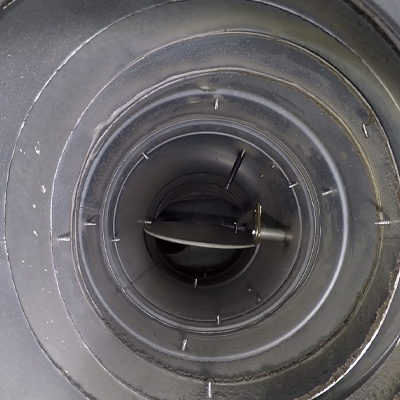
Open:
normal operation
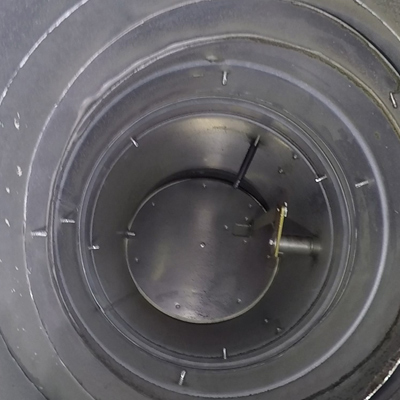
Closing:
fire emergency
Key statistic: typically, in a space of 1,000 sq. m. we would expect to find between 40 and 80 dampers. This can be significantly higher depending on the layout or design of the building and the compartmentation.
The PTSG Advantage in Damper Testing
As part of the PTSG group, Indepth Services combines specialist fire damper expertise with the comprehensive building safety knowledge that comes from being part of the UK’s leading building services organisation. Our integrated approach means we understand how your damper systems work alongside your building’s entire fire safety strategy, from compartmentation to access systems, ensuring complete protection and compliance.
With PTSG’s nationwide network and resources, we deliver consistent, high-quality damper testing services across the UK, backed by over 40 years of building safety expertise and the reliability that comes with being part of a trusted, established group.
What is Involved in Damper Inspection and Testing?
A visual inspection of your dampers will identify surface damage or anomalies in the installation. Many contractors simply don’t understand the function of smoke and fire dampers and can inadvertently impair their operation.
Our comprehensive 5-step PTSG-standard process:
Step 1: Damper identification & location
We identify all dampers in your building using schematics or comprehensive physical inspection. Every damper must be located and documented for complete compliance.
Step 2: Accessibility assessment
We ensure all dampers are accessible for testing – a legal requirement. Builders’ hatches and access panels are installed where needed as part of our complete service.
Step 3: Visual inspection
Thorough visual inspection identifies surface damage, installation anomalies, and any factors that could impair damper operation. Many contractors don’t understand damper function and can inadvertently cause problems.
Step 4: Drop testing
We test each damper by manually activating the release mechanism (usually a fusible link or thermal spring) to check the damper closes completely, then reset it for operational readiness.
Step 5: Comprehensive documentation
A visual inspection and complete testing are your reassurance that your system is fully operable and it is the only way to achieve compliance.
Common installation issues we discover
Our PTSG-trained teams have discovered dampers that have been installed upside down – which would make them inoperable as many dampers require gravity to function. Others have been incorrectly installed, with extensive damage to the fire compartment, making them ineffective and the whole system non-compliant.
Real examples from our inspections:
Upside-down installation
Dampers installed upside-down become completely inoperable as many require gravity to function properly during emergency closure.
Compartment damage
Incorrect installation causing extensive damage to fire compartments, rendering the entire system non-compliant and ineffective.
Foreign objects
Incredible discoveries include a fork and spoon holding the damper open (we never did find the knife!) - improvised "solutions" that compromise safety.
Permanent disabling
Unistrut fixed to dampers to permanently hold them open – yes, somebody paid a contractor to ruin their fire safety system.
Unauthorised modifications
Other services regularly use dampers as conduit for networking cables and similar installations, compromising their emergency function.
Mechanical failures
Damaged release mechanisms, corroded components, and blocked airways that prevent proper damper operation during emergencies.
Expert insights

“Fire dampers are your building’s hidden life-savers, but only if properly maintained. Missing certification could void your insurance and leave you liable.”
Gavin Richards
Compliance Expert & Director
The Indepth difference
If you choose to work with Indepth Services, part of the PTSG group, our team will not only identify issues like these, but also help you to find solutions. We will not simply leave you with a report stating your system is not compliant.
Our PTSG heritage means we bring decades of building safety expertise to every project, with access to comprehensive resources and specialist knowledge across multiple building safety disciplines. This integrated approach ensures your damper systems work seamlessly with your building’s entire fire safety strategy.
Industry-leading reporting platform
Our team have developed an industry-leading fire damper inspection and testing reporting platform. It was built to comply with the standards set out in BESA Technical Bulletin VH001 and reflects the high standards expected across all PTSG group services.
Comprehensive documentation
Whereas standard reporting will give you a list of issues identified, our PTSG-standard reporting goes further. We provide you with comprehensive details of all dampers tested, including photographic evidence of the damper before, during, and after testing.
What’s included:
- Detailed records: complete documentation of all dampers tested
- Photographic evidence: before, during, and after testing images
- Issue documentation: clear identification of any problems found
- Remedial guidance: detailed advice and costings for any required repairs
- BESA VH001 compliance: meets stringent industry standards
- Integration assessment: how dampers work with your overall fire safety system
If any issues are identified, we provide further photographs and advice on remedial steps, including detailed costings.
Beyond standard reporting:
- Actionable insights, not just problem lists
- Clear pathways to compliance
- Professional documentation for insurance purposes
- Digital access through dedicated portal
- PTSG-quality assurance and follow-up support
Take Action Today
Book your free survey Get expert damper inspection and testing
Download your free guide Comprehensive guidance on fire damper compliance and maintenance
Contact our team: 020 8661 7888